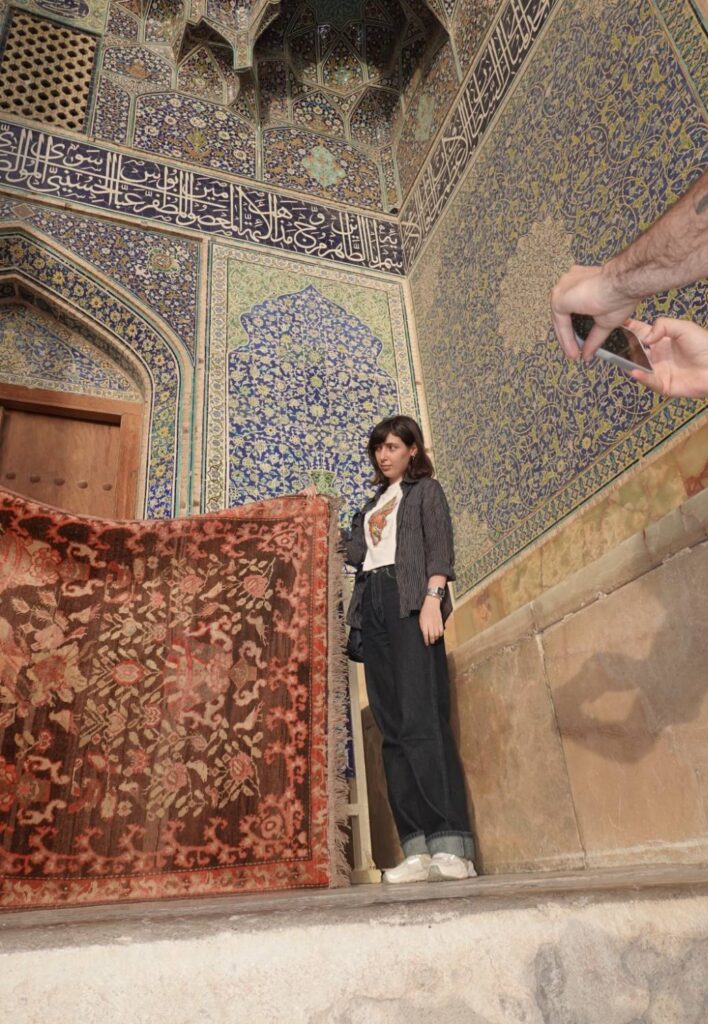
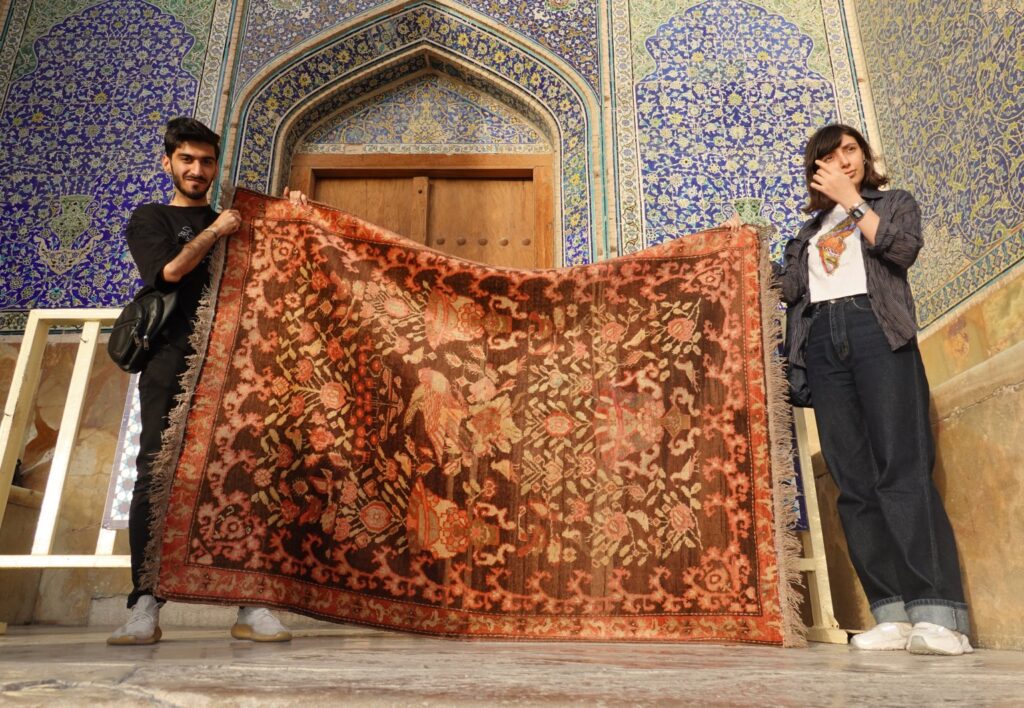
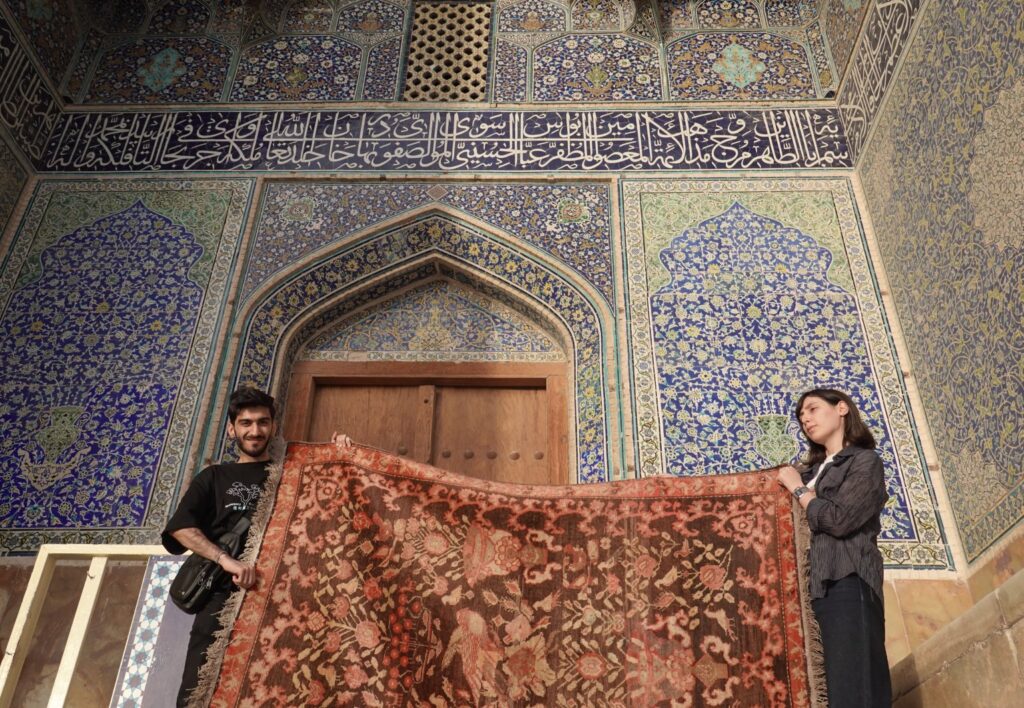
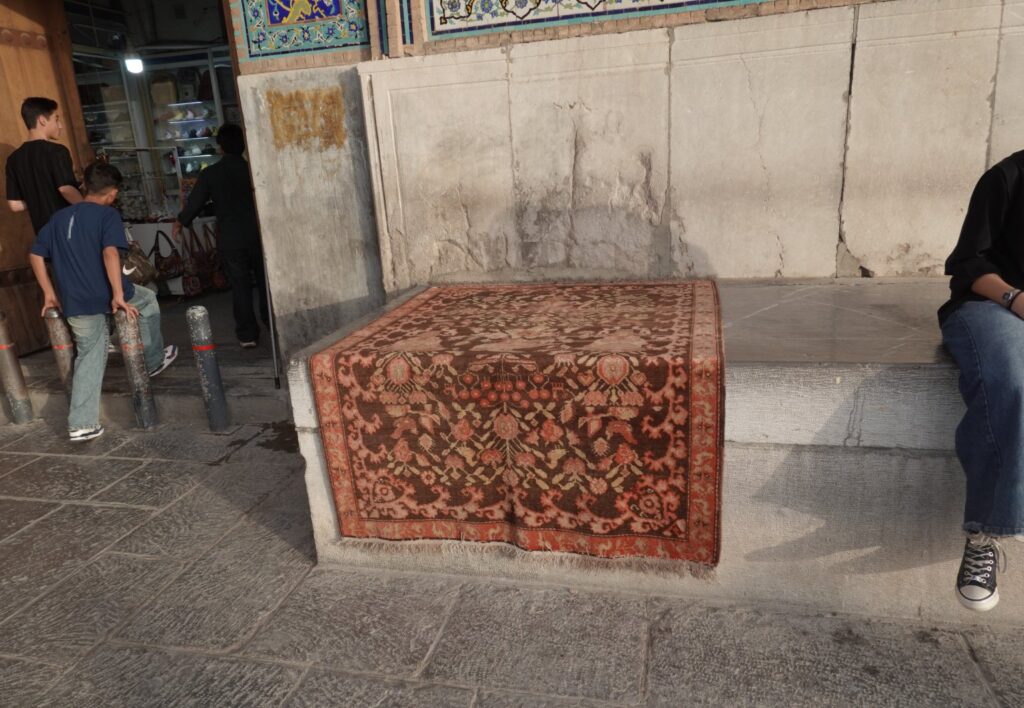
This exceptional antique Caucasian Qarabaq (also spelled Karabagh) rug is a striking and highly collectible piece, estimated to be approximately 95 years old, dating back to the late 1920s or early 1930s. Originating from the Karabagh region in the southern Caucasus (historically part of Persia and now within modern-day Azerbaijan), these rugs are celebrated for their bold, dramatic designs, earthy color palettes, and robust, durable weaving. This hand-knotted masterpiece measures 210 centimeters in length by 140 centimeters in width (roughly 6’11” by 4’7″), making it a versatile size ideal for a living room accent, a dining area, a bedroom centerpiece, or a statement runner in a hallway. The rug is hand-knotted using high-quality, naturally dyed wool on a cotton foundation, featuring the sturdy, dense weave that Qarabaq weavers are renowned for.
In terms of design and motifs, this Qarabaq rug features a spectacular, highly elaborate “all-over” floral and pictorial pattern set against a deep, warm chocolate-brown or espresso field. The design is distinctively Caucasian in its boldness, yet it incorporates refined, Persian-influenced floral elements. The entire field is densely covered in a flowing, rhythmic arrangement of stylized floral sprays, rosettes, meandering vines, and leafy branches, rendered in soft salmon pink, madder red, camel gold, and cream. What makes this rug truly exceptional are the hidden pictorial motifswoven into the floral chaos. Scattered throughout the field are stylized animal figures, including birds perched on branches and quadruped forms (possibly deer, gazelles, or dogs), as well as small, geometric human-like or totemic shapes. These tribal, pictorial elements are a hallmark of Qarabaq weaving and add a layer of storytelling and charm to the rug. The overall composition is organic and asymmetrical, with no single dominating medallion, inviting the eye to wander and discover new details with every glance.
The border framing this rich and intricate field is wide and highly decorative, set against a soft salmon-pink or terracotta ground. The main border features a continuous, meandering “herati” or scrolling vine pattern, populated with repeating, stylized rosettes, leaves, and floral motifs in camel, cream, and dark brown. The border is flanked by multiple narrow guard stripes in dark brown and cream, featuring small, repeating chain-link and diamond motifs. The corners of the rug are sharply resolved, with the border patterns turning at precise 90-degree angles. The outer edges are secured, and the rug features long, hand-tied fringes at both ends, which have naturally aged to a soft, creamy yellow, showing the gentle wear of 95 years.

The color palette of this 95-year-old Qarabaq rug is warm, earthy, and deeply saturated, derived entirely from natural dyes that have aged with a beautiful patina. The dominant color is a rich, warm chocolate brown or espresso that fills the entire central field, providing a dark, dramatic backdrop that makes the lighter floral motifs pop. Contrasting against this brown are soft salmon pink, madder red, camel gold, cream, and touches of pale olive green. The rug exhibits a beautiful “abrash” across the field, where the brown dye shifts slightly from row to row, creating a mottled, dimensional effect that is highly prized in antique Caucasian rugs. The wool itself has a soft, worn-in, silky texture that only comes from decades of gentle use and natural oxidation. In terms of condition, this 95-year-old rug is sturdy and structurally sound, with a low, even pile and no major holes or damage. It shows the gentle, expected wear of a vintage piece, making it ready for immediate use in a modern home. This Qarabaq rug is a rare and captivating piece that will bring history, warmth, and undeniable character to any interior.

Versatile Size: Measures 210 x 140 cm (approx. 6’11” x 4’7″) — ideal for a living room accent, dining area, bedroom centerpiece, or hallway runner.
Rich Chocolate-Brown Field: The deep, warm espresso field provides a dramatic backdrop for the intricate floral and pictorial motifs.
Hidden Pictorial Motifs: Features stylized birds, quadrupeds (deer/gazelles), and human-like totemic shapes woven into the floral design — a rare and charming storytelling element.
Elaborate All-Over Floral Design: Densely covered in flowing floral sprays, rosettes, meandering vines, and leafy branches, creating an organic, rhythmic composition.
Soft Salmon-Pink Border: A wide, meandering border in terracotta/salmon pink with repeating rosettes and vines, framed by multiple intricate guard stripes.
Natural Dyes & Beautiful Abrash: Colors are entirely natural, including chocolate brown, salmon pink, madder red, camel gold, and cream. The visible “abrash” (color variation) is highly prized by collectors.
Silky Antique Patina: The wool has developed a soft, worn-in, lustrous sheen from 95 years of natural aging — a texture no modern rug can replicate.
Structurally Sound & Ready to Use: Secure edges, no major holes or damage, and a low, even pile. This rug is sturdy enough for daily floor use in a modern home.
Collector-Grade Provenance: Qarabaq rugs with pictorial motifs are rare and highly sought after. This piece is a museum-quality example of Caucasian tribal weaving.

The dominant motif within the dark brown field is a series of stylized vases and floral sprays, often referred to in Caucasian rug literature as “vase and flower” or “garden” motifs. These vases are not realistic or highly detailed; rather, they are abstracted forms from which stems, leaves, and blossoms spring upward. The flowers themselves resemble the wild rose (Sorkhi) or the rose (Gul), which holds immense cultural significance in Azerbaijani and Caucasian art. In this context, the entire field represents a Garden of Paradise—a symbolic representation of a fertile, blessed, and protected home. The “scattered” flowers (often called the Afshan pattern) imply that beauty and abundance are not confined to one spot but are spread throughout the environment.
Border and Secondary Motifs
The wide red main border features a repeating “S-hook” or “Running Dog” (Kochak) pattern. In Caucasian symbolism, this S-shaped hook is a stylized representation of ram’s horns. The ram is a symbol of strength, leadership, and wealth in nomadic and semi-nomadic cultures, and weaving this motif into the border was believed to bring prosperity and protection to the household. The guard borders (the thin stripes inside the main border) contain smaller, repeating geometric dots and stepped lines, which act as a protective barrier—a “wall” of symbols meant to contain the beauty of the inner field.
Distinctive “Creature” or “Beast” Motif
Upon close inspection of the lower-central portion of the brown field, there appears to be a slightly larger, more amorphous motif that deviates from the standard floral clusters. This shape resembles a stylized animal or beast, possibly a lion or a mythical creature found in Caucasian folklore. While the Afshar rug (discussed previously) relied strictly on geometric forms, Qarabaq weavers often inserted “creature” motifs—either lions, birds, or abstract dragons—into their floral gardens. If this shape is indeed an animal, it serves as a guardian figure, watching over the garden and warding off evil spirits, a common practice in Caucasian tribal art.
Symbolic Summary
In summary, this Qarabaq rug is a layered textile narrative. The brown earth grounds the viewer, symbolizing the land and the tribe’s connection to it. The red border provides vitality and protection. The Millefleur garden represents a wish for prosperity, fertility, and paradise within the home. And the potential beast/guardian in the field offers watchful protection. Unlike the more rigid, geometric Afshar rug seen previously, this Qarabaq rug reflects a Caucasian aesthetic that blends Persian floral sensibilities with bold, earthy, and symbolic tribal expression, creating a piece that is both decorative and deeply spiritual.