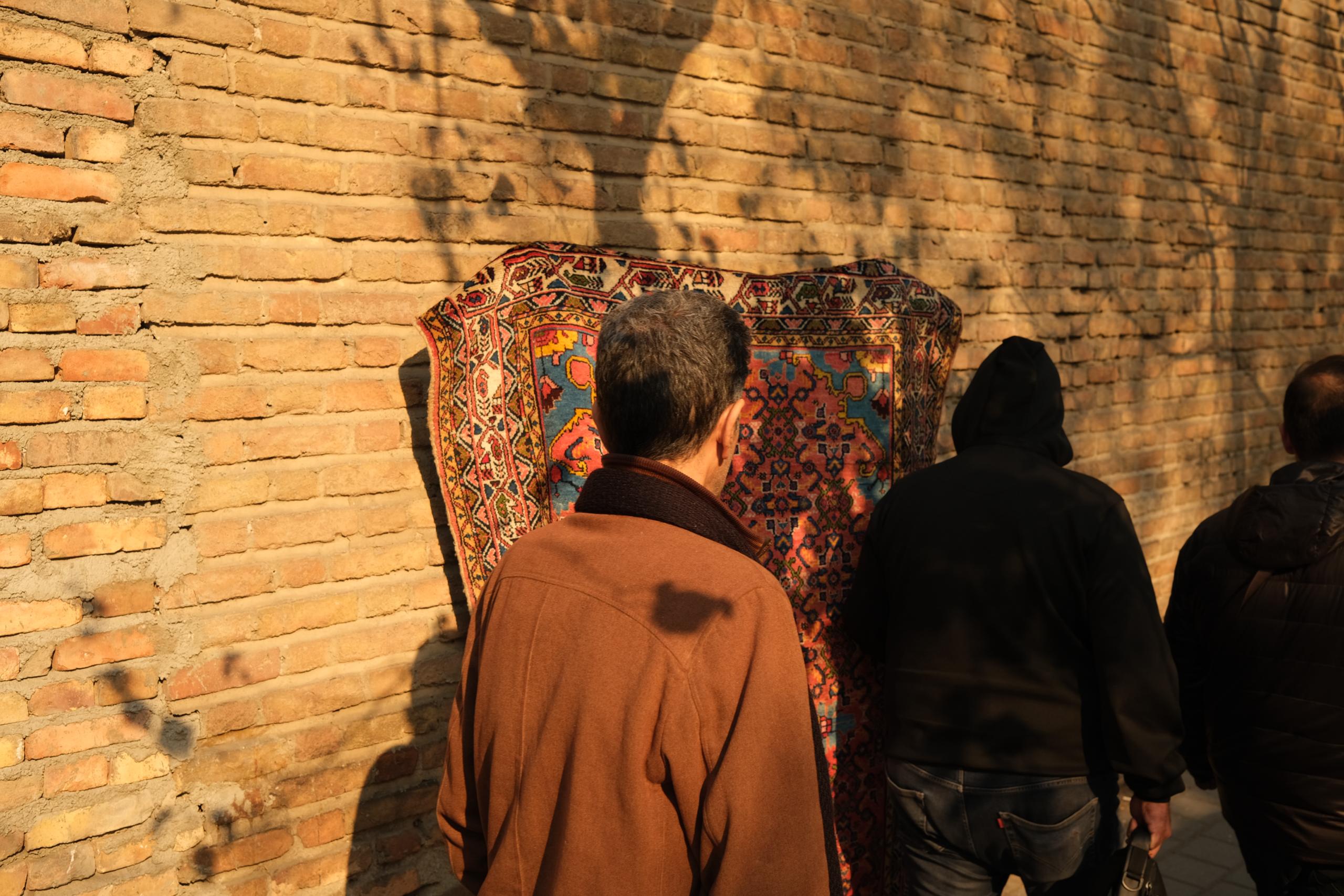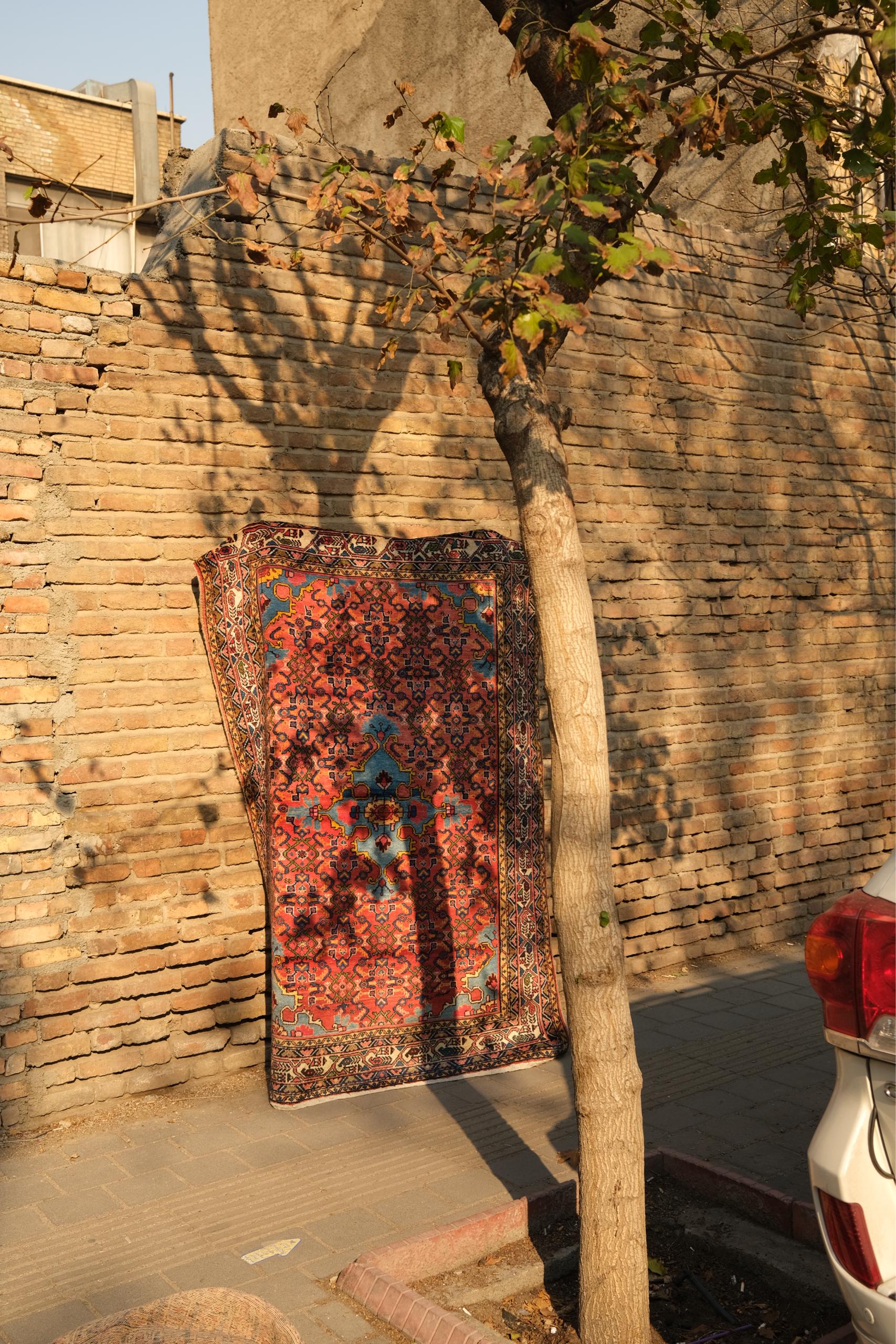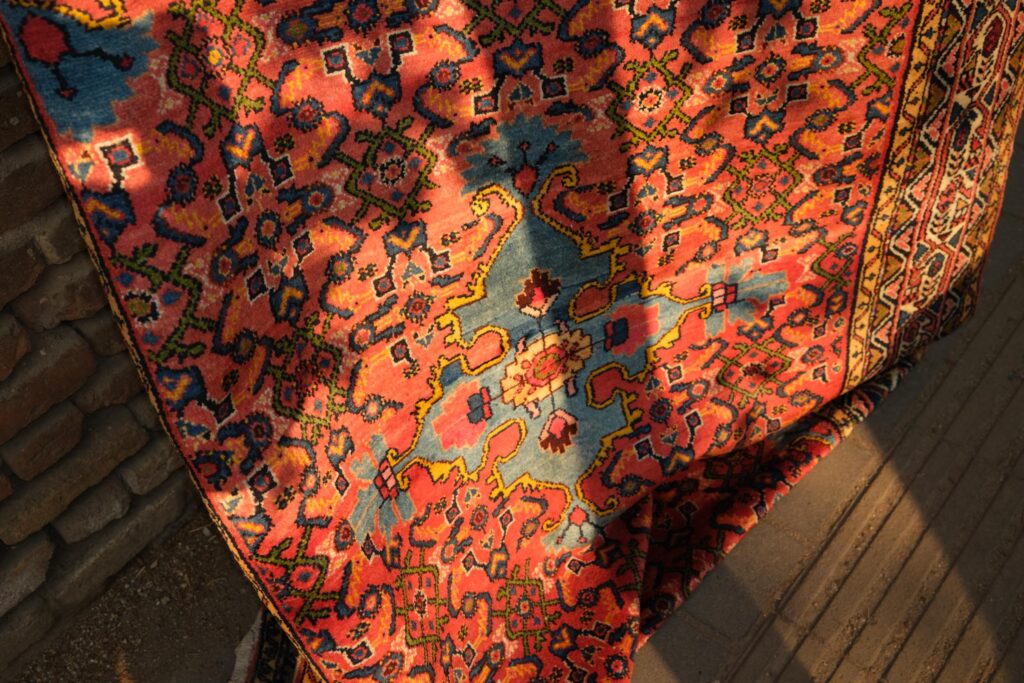
The rug features a light blue (turquoise/sky-blue) ground with a rich, warm color scheme. The main decorative elements are made in deep red (lacquered/rust-red tones), dark green, and golden yellow (a cream-gold effect) that creates bright halos around many motifs. You also see darker blue (sometimes close to navy) used for fine outlines and secondary detailing, along with very dark accents (serpentine/near-black) in the borders to give strong contrast. Small touches of pink/peach appear in a few blossoms and accents, but the overall impression is a bold, classic palette of cool blue ground plus warm reds and greens. In terms of composition, the design is a rectangular, fully structured pattern with multiple layers of inner and outer borders.
The center is filled with an ornate field where the motifs are dense and highly decorated, giving a “medallion-like” richness even though the overall layout remains a field-and-border arrangement. The central area is concentrated with small, repeating floral forms—many resembling multi-petal (often eight-petal or many-petaled) blossoms—and geometricized vine/arabesque elements that are visually connected through the surrounding framework. The side and corner sections emphasize flowing wave-like and branching ornamental divisions. A distinctive feature is the golden-yellow halo effect that outlines and highlights many of the main shapes, making the pattern appear sharper and more dimensional. This haloing is especially noticeable around the central floral clusters and the large repeating shapes within the field.
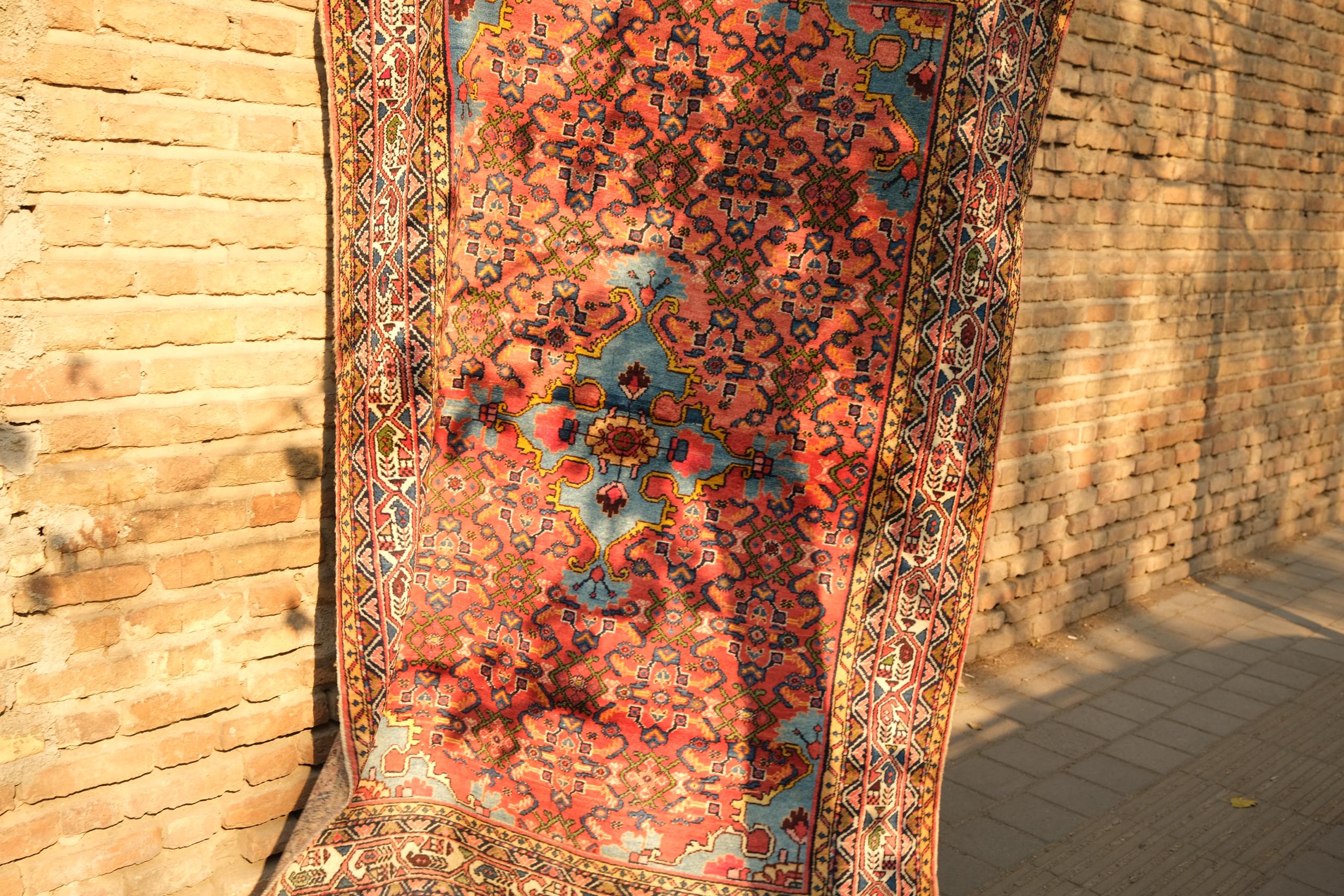
The borders are layered: the main border includes a sequence of decorative repeats such as small rosette/star-like forms and diamond-based patterning, while additional slimmer border lines create a tighter, framed look around the rug. The outermost edge uses very dark tones with fine repeating micro-patterns, acting like a protective guard border and completing the overall classic Hamadan-style (in style and execution) presentation.