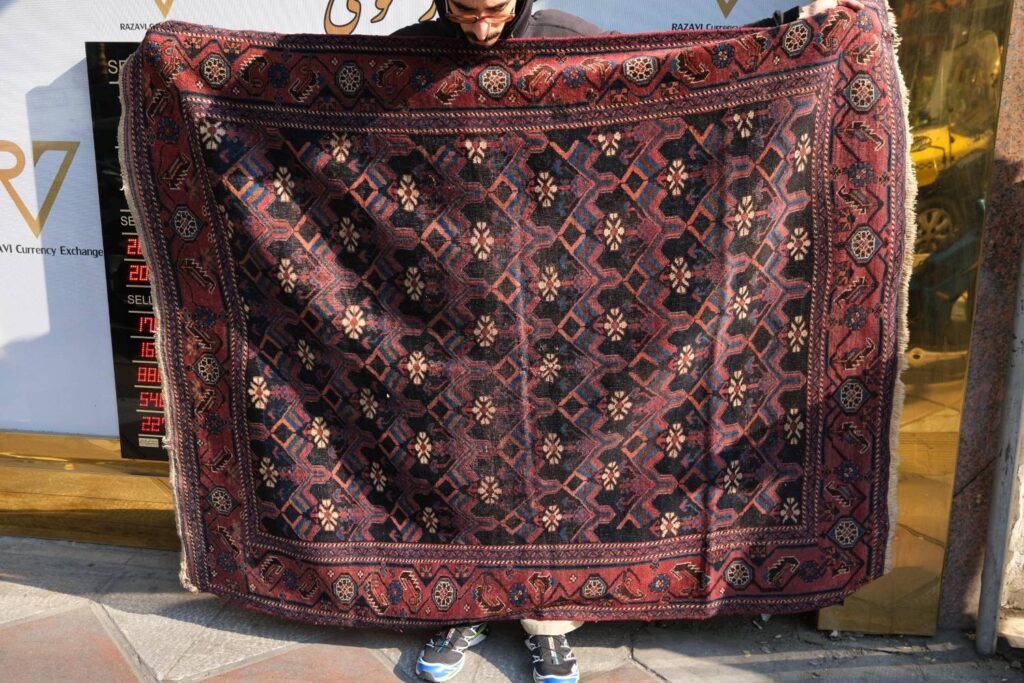
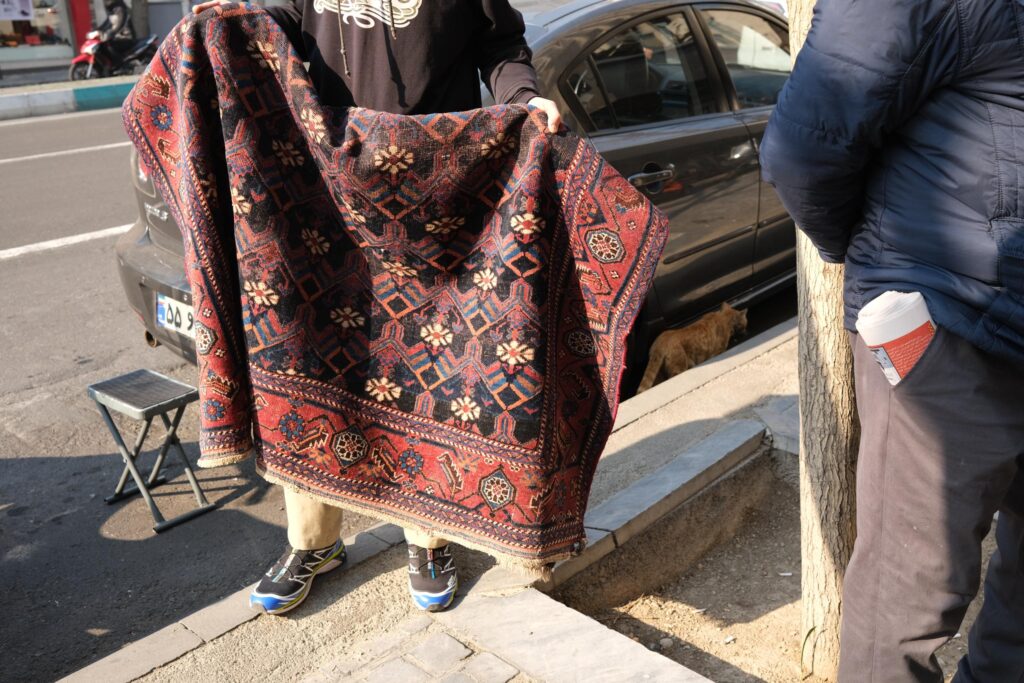
This exceptional antique Persian Afshar rug is a rare and highly collectible piece, estimated at approximately 140 years old, dating back to the late 19th century (circa 1880s). Originating from the Afshar tribe, a semi-nomadic group primarily located in the Kerman and Fars provinces of southern Iran, this rug embodies the rugged, geometric aesthetic and deep, saturated colors that have made Afshar weavings legendary among collectors and connoisseurs. It measures 180 centimeters in length by 140 centimeters in width (roughly 5’11” by 4’7″), making it a versatile, near-square size ideal for a living room accent, a dining area, a bedroom centerpiece, or a decorative wall hanging. The rug is entirely hand-knotted using high-quality, naturally dyed wool on a wool foundation, featuring a dense, sturdy weave that has withstood nearly a century and a half of use.
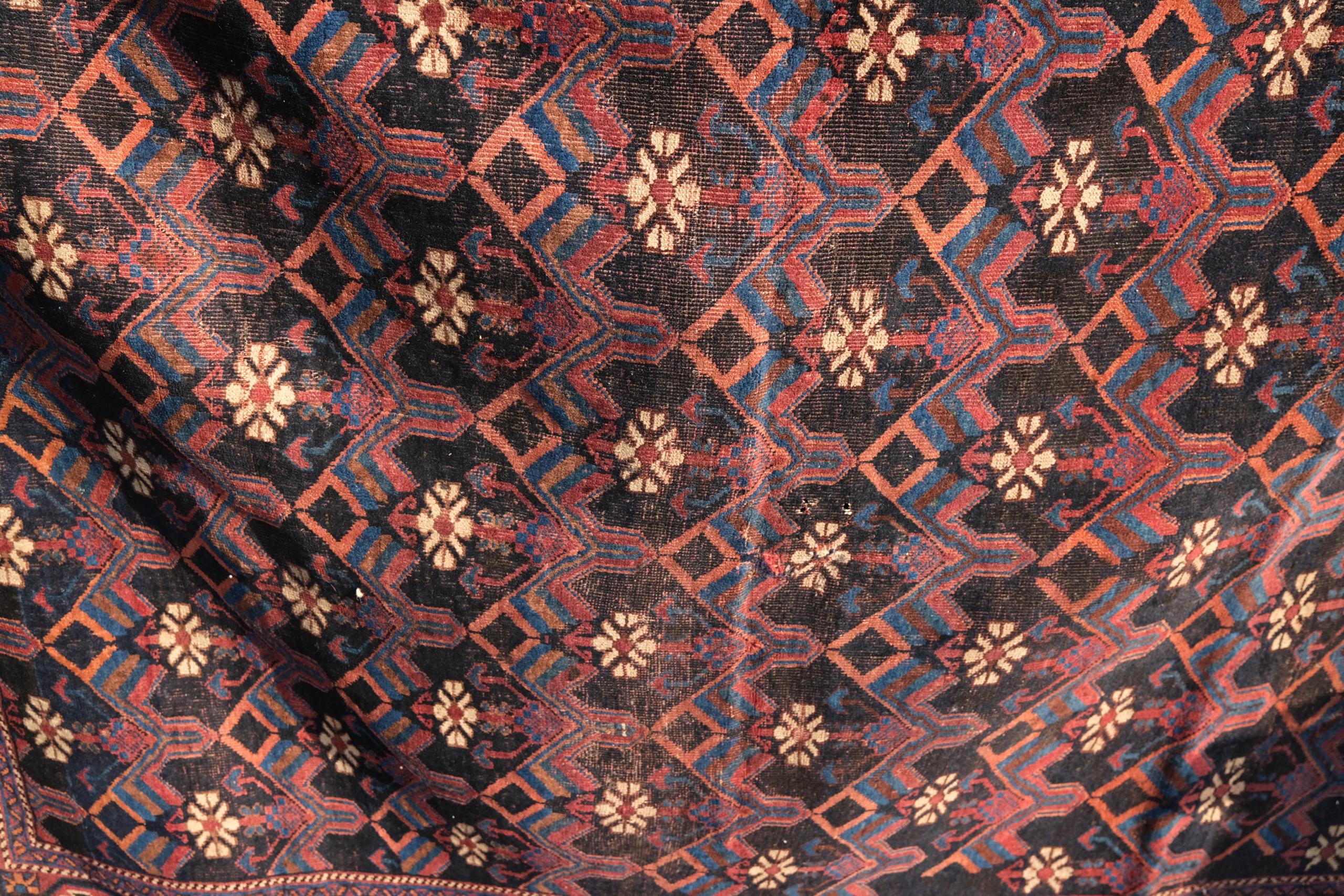
In terms of design and motifs, this 140-year-old Afshar rug features a striking, highly structured “all-over” geometric lattice pattern that is both bold and rhythmic. The central field is set against a deep, dark indigo or midnight blue background, which serves as a dramatic canvas for the repeating motifs. The entire field is covered in a continuous, interlocking diamond or zigzag lattice, rendered in a rich, warm madder red and touches of light blue. Inside each diamond-shaped compartment of this lattice sits a single, prominent, stylized floral rosette in ivory or cream. These rosettes feature a distinct, multi-petaled star-like shape with a dark center, repeating uniformly across the entire field in perfect alignment. The contrast between the dark indigo field, the red lattice, and the bright ivory rosettes creates a mesmerizing, optical effect that draws the eye across the rug. The corners of the field are resolved with diagonal, stepped spandrels that seamlessly integrate with the lattice pattern.
The border framing this extraordinary field is wide, bold, and deeply tribal, set against a rich madder-red background. The main border features a continuous, repeating series of large, circular, stylized rosettes or “guls,” which are highly characteristic of Afshar weaving. These circular motifs are detailed with geometric centers and serrated outer edges, alternating with smaller, secondary geometric shapes. Flanking the main border are multiple narrow guard stripes in dark blue and ivory, featuring small, repeating chain-link, diamond, and dot motifs. The outer edges are secured, and the rug features hand-tied fringes at both ends, which have naturally aged to a soft, creamy yellow, showing the gentle, uneven wear of 140 years. The fringes are tightly spun and show the variation typical of hand-spun wool from the late 19th century.
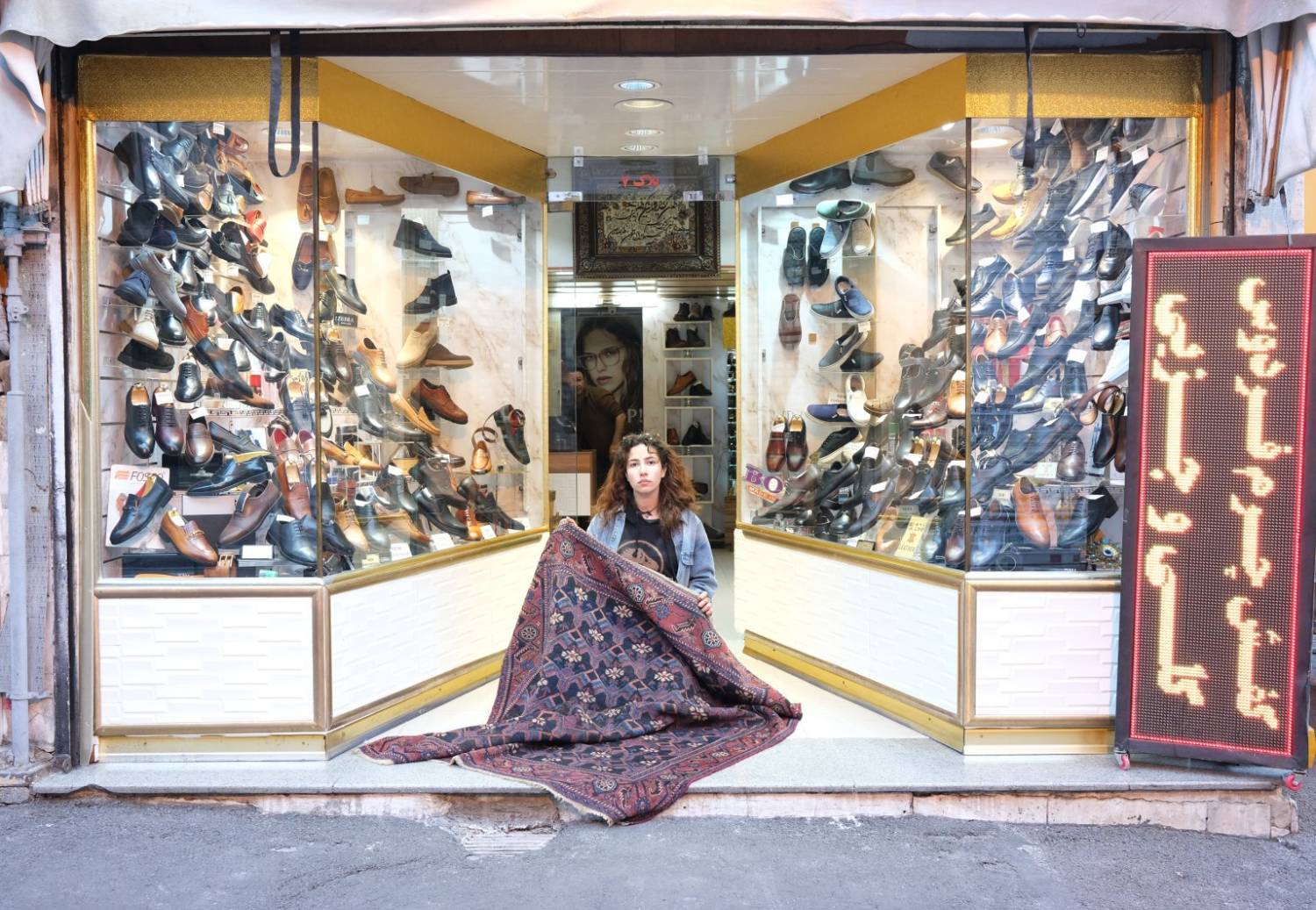
The color palette of this 140-year-old Afshar rug is deep, rich, and deeply saturated, derived entirely from natural dyes that have aged with a stunning patina. The dominant colors are a dark, inky indigo blue in the central field, a vibrant, warm madder red in the lattice and main border, and a bright, contrasting ivory or cream in the repeating rosettes. Secondary colors include touches of light sky blue, camel, and dark chocolate brown. The rug exhibits a beautiful, pronounced “abrash” across the field, where the indigo and red dyes shift slightly from row to row, creating a mottled, dimensional effect that collectors of antique tribal rugs highly prize. The wool itself has a soft, worn-in, almost silky texture that only comes from over a century of gentle use and natural oxidation. In terms of condition, this is a true antique and shows the expected signs of its age. The pile is low but consistent, with no bare spots, and the structural integrity remains solid, with secure edges and no major holes or damage. This 140-year-old Afshar rug is a rare, museum-quality piece that will bring unparalleled history, warmth, and authentic tribal character to any interior.
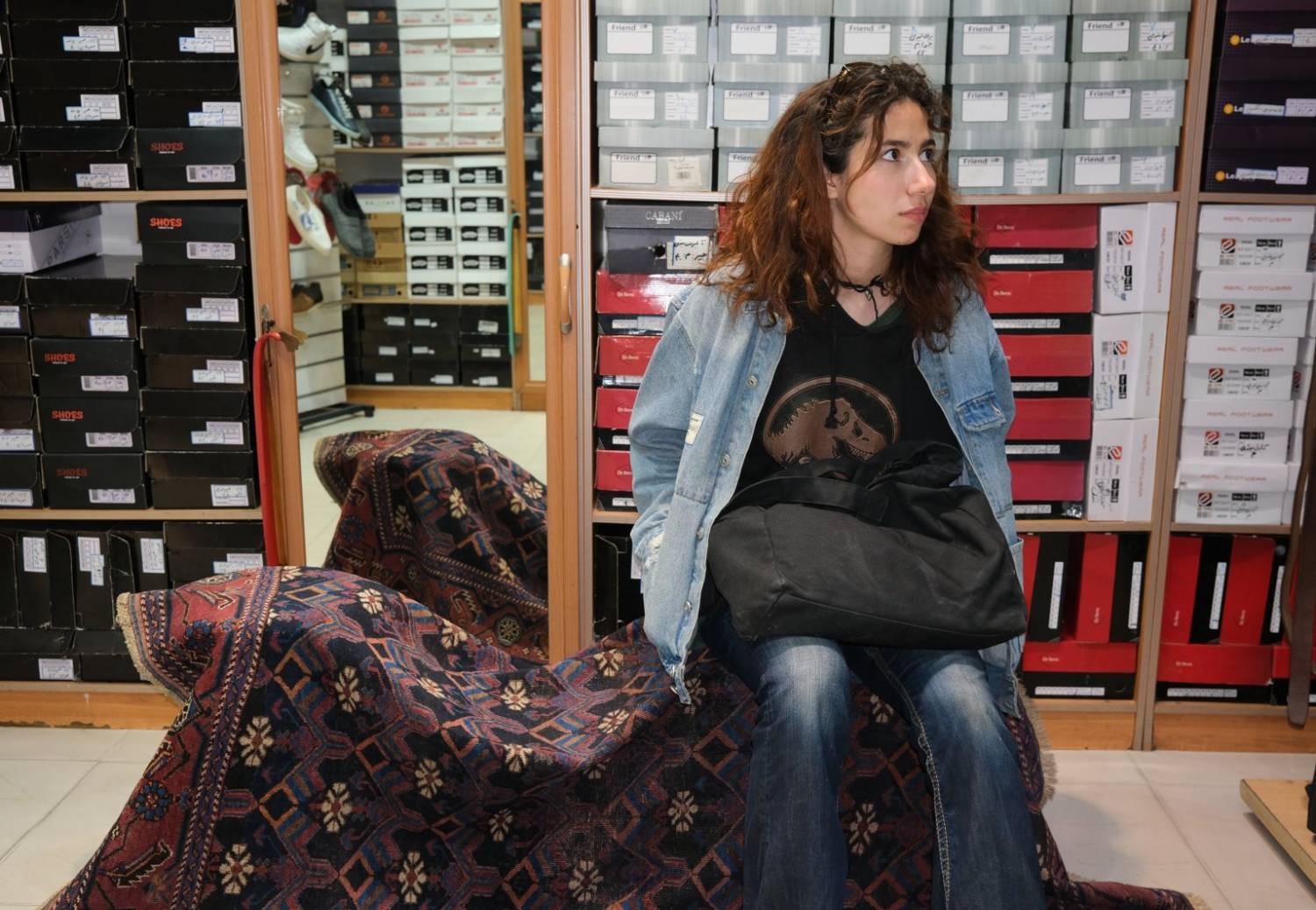
– Perfect Near-Square Size: Measures 180 x 140 cm (approx. 5’11” x 4’7″) — ideal for a living room accent, dining area, bedroom centerpiece, or wall hanging.
– Striking Geometric Lattice Design: Features a bold, interlocking diamond lattice in madder red over a deep indigo field, with a repeating, uniform pattern of stylized ivory floral rosettes inside each diamond.
– Dramatic Visual Contrast: The dark indigo field, warm red lattice, and bright ivory rosettes create a mesmerizing, rhythmic optical effect that draws the eye.
– Tribal Afshar Border: A wide madder red border adorned with large, circular stylized “gul” rosettes and serrated edges, framed by multiple intricate guard stripes.
– Natural Dyes & Deep Abrash: Colors are entirely natural, including inky indigo, warm madder red, and bright ivory. The pronounced “abrash” (color variation) across the field is highly prized by collectors.
– Silky Antique Patina: The wool has developed a soft, worn-in, lustrous sheen from over 140 years of natural aging — a texture no modern rug can replicate.
– Sturdy, Dense Weave: Hand-knotted on a wool foundation with a tight, durable construction that has remained structurally sound for over a century.
– Structurally Sound & Ready to Use: Secure edges, no major holes or damage, and a low, even pile. This rug is sturdy enough for daily floor use in a modern home.
– Collector-Grade Provenance: Afshar rugs from the late 19th century are rare and highly sought after. This piece is a museum-quality example of tribal Persian weaving.
Here is a breakdown of what the specific motifs stand for and the symbols found in this rug:
1. The Star / Rosette (The Primary Field Motif)
Appearance: An 8-pointed star with a jagged, serrated edge and a pale/ivory center.
Symbolism: The Sun & Light: In Zoroastrian and tribal lore, the star represents light conquering darkness. The 8 points symbolize the 8 directions of the wind.
Fertility & The “Sorkhi” (Wild Rose): In Afshar culture, this specific floral shape represents the wild rose that grows in the mountains of Kerman. It symbolizes beauty, life, and the spring season.
Protection: The “toothy” or serrated edge is often considered an apotropaic symbol—meaning it was woven to “bite” or ward off the evil eye.
2. The Geometric Lattice / Diamond Network
Appearance: The dark blue background is crisscrossed by red, stepped lines forming diamonds.
Symbolism: Enclosure & The Earth: The diamonds represent the field of the earth, fenced in. It is a symbol of the tribe’s territory, their wintering grounds, and the boundaries of their camp.
Interconnectedness: The continuous red lines suggest the interconnected nature of family and tribal relations—they are “woven” together.
3. The Main Border Medallions (The “Guls”)
Appearance: The large, round/octagonal shapes repeated along the red border.
Symbolism: A “Gul” (Flower/Medallion): Historically, these represent a specific tribal seal or a flower. In Sirjan Afshar borders, this specific shape is often identified as “The Sheep’s Head” or “The Horns.”
Wealth: In a nomadic economy, sheep were currency. The stylized horns/head represent a wish for a large flock, which equals wealth, milk, and wool.
4. The “S-Hook” / “Cochineal” Motifs
Appearance: Small, hooked or curved shapes appearing in the inner guard borders.
Symbolism: The Ram’s Horns: This is a very ancient symbol (pre-Islamic) representing masculine strength, leadership, and the head of the tribe.
The Running Dog: Sometimes called “Kochak,” this S-shape resembles a dog running in profile. In tribal belief, the dog is a guardian—a symbol of loyalty and protection for the home.
5. Stepped / Serrated Edges (On all forms)
Appearance: You will notice that the outside of the star, the lines of the diamond, and the border medallions are all “stepped” or jagged rather than smooth.
Symbolism: Teeth / Protection: This is the single most protective symbol in tribal weaving. By surrounding the motifs with “teeth” or “steps,” the weaver is creating a fortress against spirits, bad dreams, or jealous eyes.
6. The Color Symbols (Unspoken but Meaningful)
Indigo (Dark Blue): Represents the sky, night, and the infinite (the unknown future). It is the color of peace and contemplation.
Madder (Red): Represents blood, life, and vitality. It is the color of happiness and the warmth of the hearth.
Ivory (White): Represents purity, milk, and light.
In 1880s Sirjan, most women weavers were illiterate but deeply knowledgeable about these symbols. They did not weave “designs”—they wove prayers, wishes for prosperity, and protective amulets into the fabric. When you look at this rug, you are looking at a tribal document of the Afshar people’s worldview.
