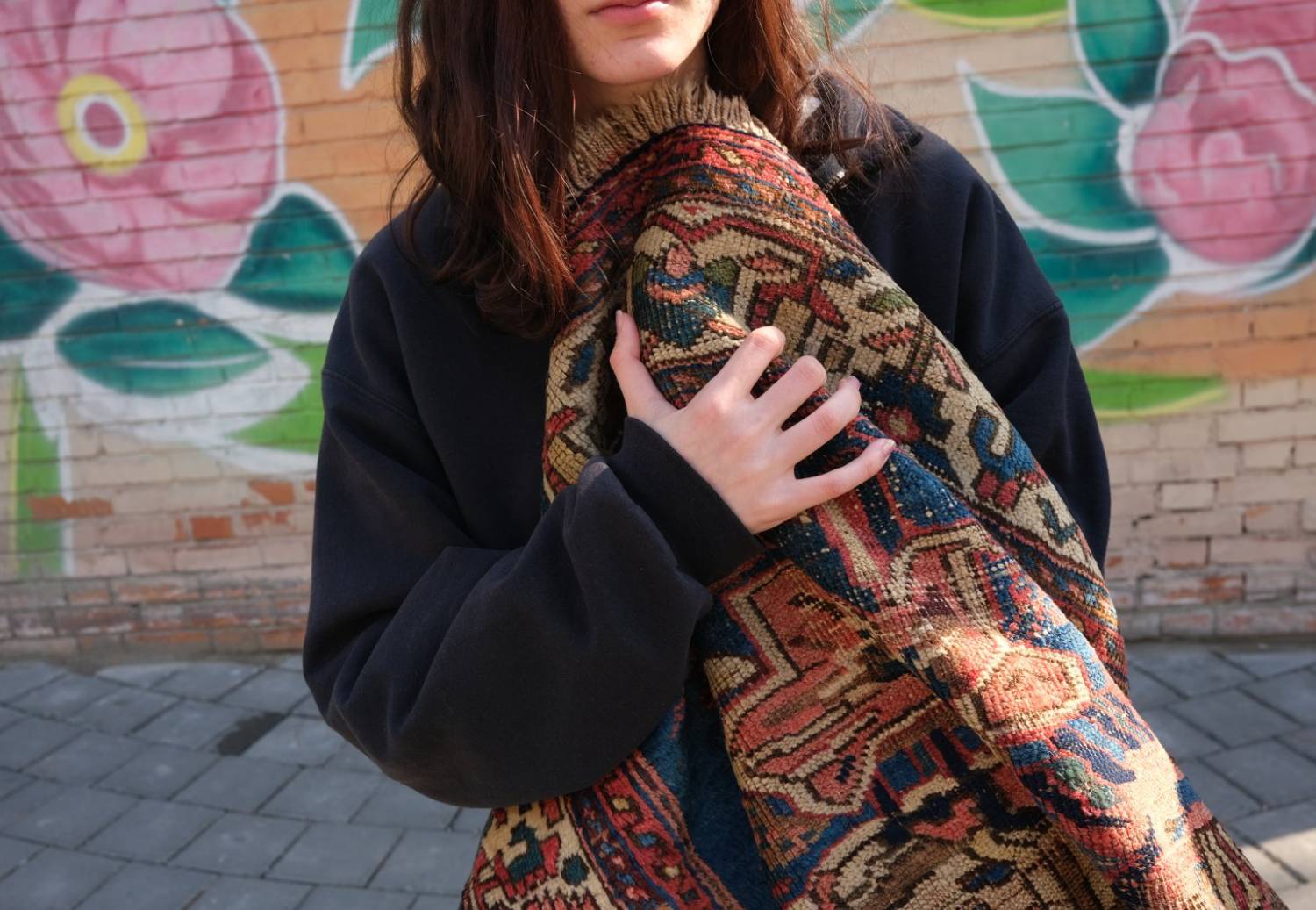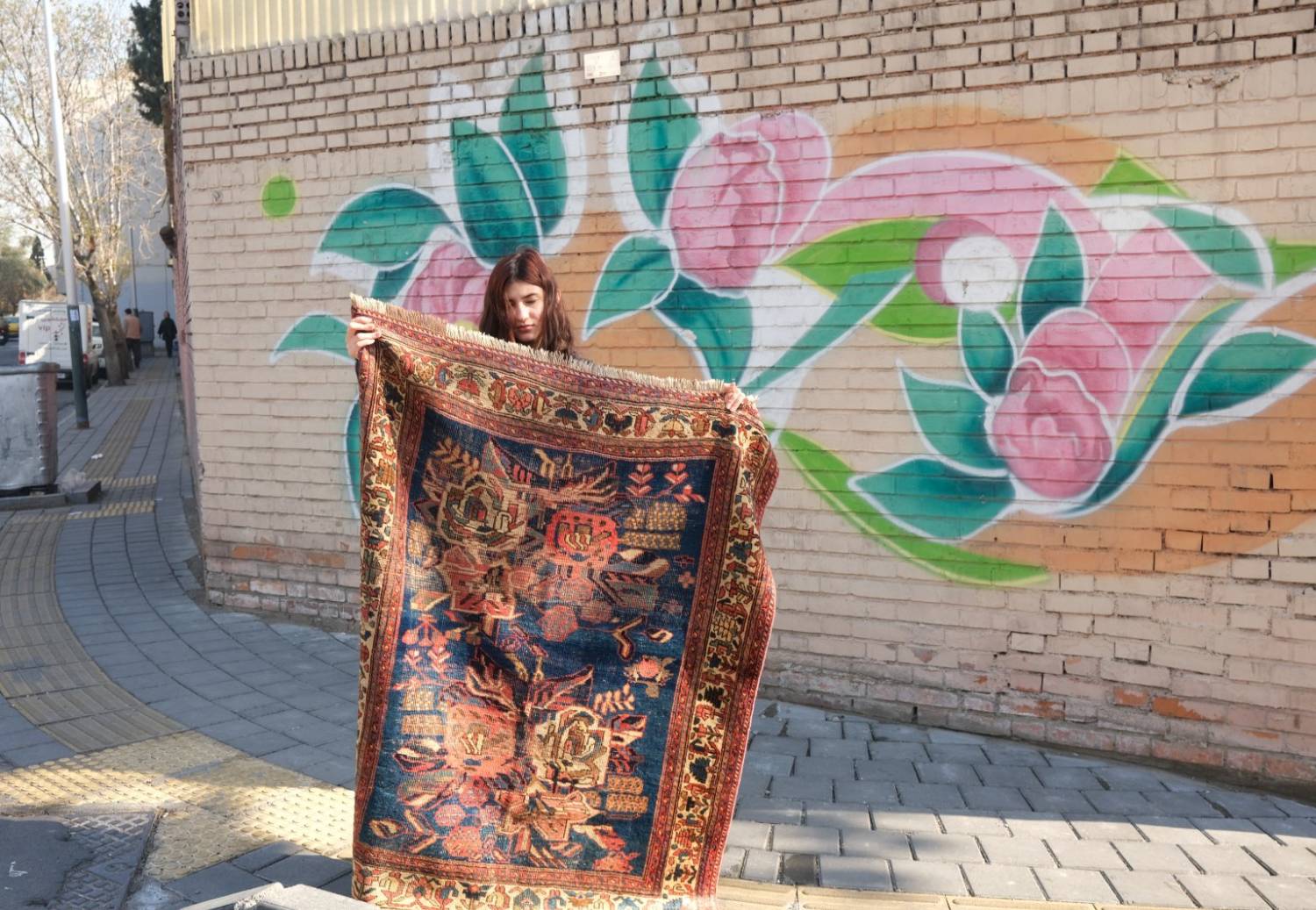
This is a hand-knotted antique Sirjan rug, originating from the Sirjan region in the Kerman province of Iran. It is 90 years old, dating to approximately the 1930s, and measures 150 by 125 centimeters, which makes it a small to medium-sized area rug, ideal for use as a decorative accent, a wall hanging, or a floor piece in a small sitting area. The rug is woven entirely of hand-spun wool, and the Instagram post confirms that it features the Gol Farang pattern, a highly collectible and distinct motif that sets Sirjan rugs apart from other Persian tribal weavings.
The layout of this Sirjan rug is a classic “field and border” composition, but with a very specific central arrangement. Unlike the all-over patterns of many tribal rugs, this rug features a distinct central field that is sparsely decorated with a few oversized, bold motifs, surrounded by a dense, intricate border system. The field is an open, dark blue space, which allows the large floral elements to stand out clearly. There is no central medallion; instead, the field contains a staggered arrangement of large, stylized floral sprays. The main border is wide and densely packed with a repeating geometric pattern, and it is flanked by narrow inner and outer guard borders that contain smaller, hook-like and diamond-shaped motifs.
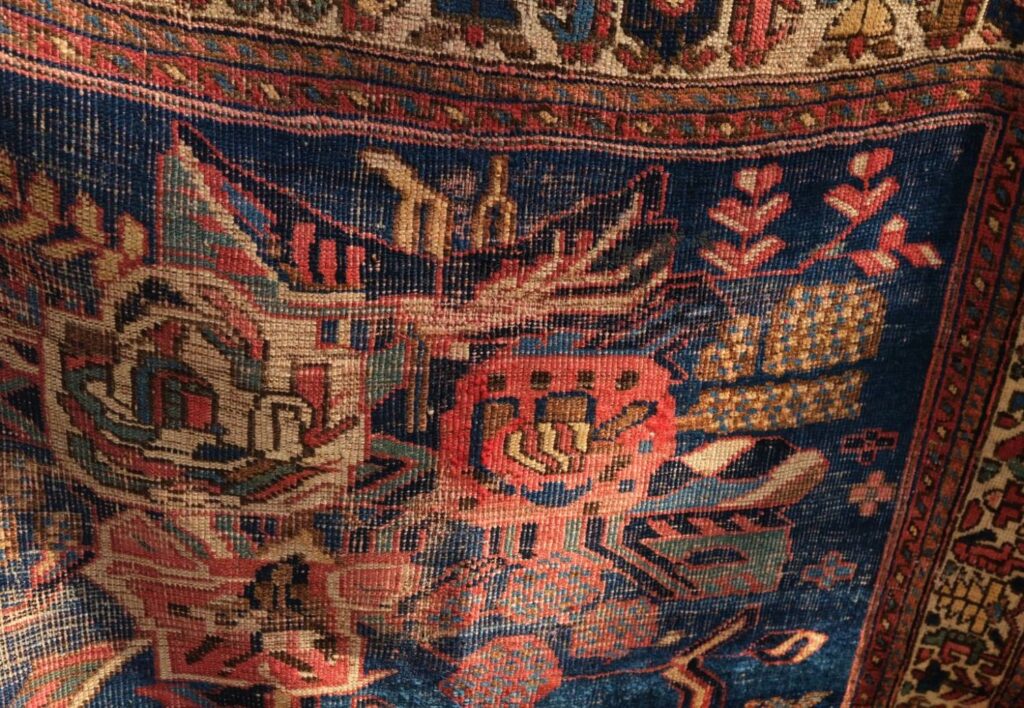
The most defining feature of this rug is the Gol Farang (literally “Foreign Flower” or “European Flower”) pattern. In the center and upper-middle of the dark blue field, you can see large, stylized floral arrangements that are distinctly different from the traditional geometric stars or diamonds of other Persian tribal rugs. These flowers resemble roses, carnations, or poppies, drawn in a somewhat impressionistic, angular way. They have large, round centers and broad petals that are outlined in ivory or light pink. In Sirjan weaving, the Gol Farang pattern was a deliberate departure from strictly geometric tribal designs. It represents a fusion of Persian tribal aesthetics with the European floral styles that were introduced to Iran in the late 19th and early 20th centuries. To a collector, the Gol Farang motif is highly desirable and signals a specific, recognizable sub-genre of Sirjan weaving.
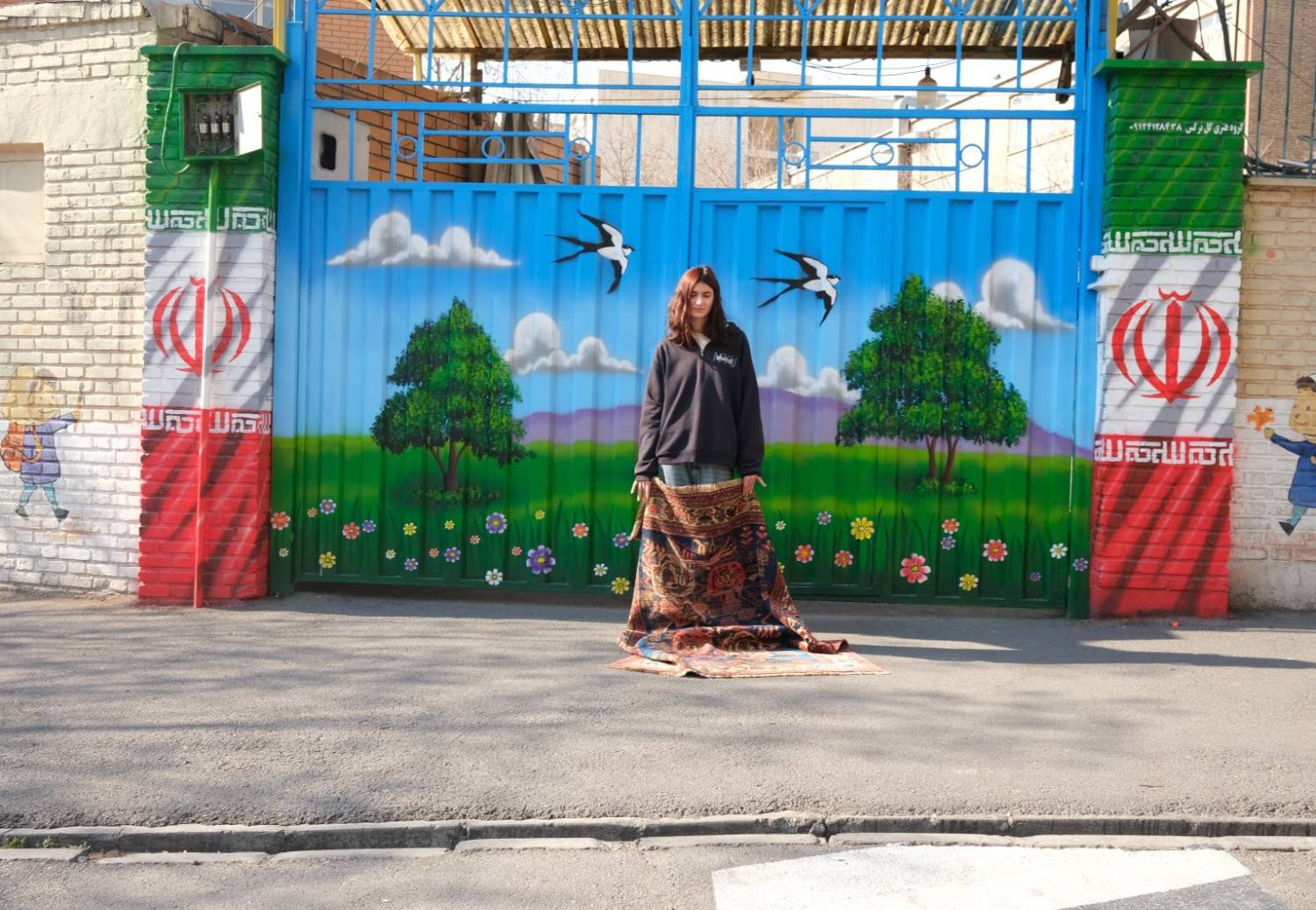
The color palette of this Sirjan rug is defined by its deep, dramatic contrast and aged, muted tones. The primary field color is a rich, saturated indigo blue that appears nearly navy, with subtle variations in tone (abrash) that indicate natural, hand-prepared dyes. The large floral motifs within the field are woven in shades of brick red, coral, soft pink, and ivory. The main border features a cream or ivory ground, which creates a bright, framing effect around the dark blue center. Accents of dusty teal, mustard yellow, and dark brown are woven into the outer guard borders and the smaller details within the main border. The overall effect is a rug that appears older and softer than its 90 years, with a patina that invites touch.
The main border of the rug is woven on an ivory ground and features a repeating “S-hook” or “Running Dog” (Kochak) pattern, which is a classic Caucasian and tribal motif symbolizing ram’s horns, strength, and protection. The S-hooks are interlocked with stylized leaves and small floral buds. The inner and outer guard borders consist of small, stepped diamonds, chevrons, and a repeating “chain” motif. These guard borders are essential to the design because they separate the bold main border from the dark field, creating a sense of architectural framing. The outermost edge of the rug has a dark band with a twisted or braided pattern that secures the fringes, which are cream-colored and appear to be mostly intact, though somewhat short, which is normal for a rug of this age.